


Solution 06 / Shipment and site handover
Export Delivery & Site Assembly Coordination for Steel Buildings
Plan packaging, loading, unloading and assembly as one sequence with explicit responsibility at every handover.
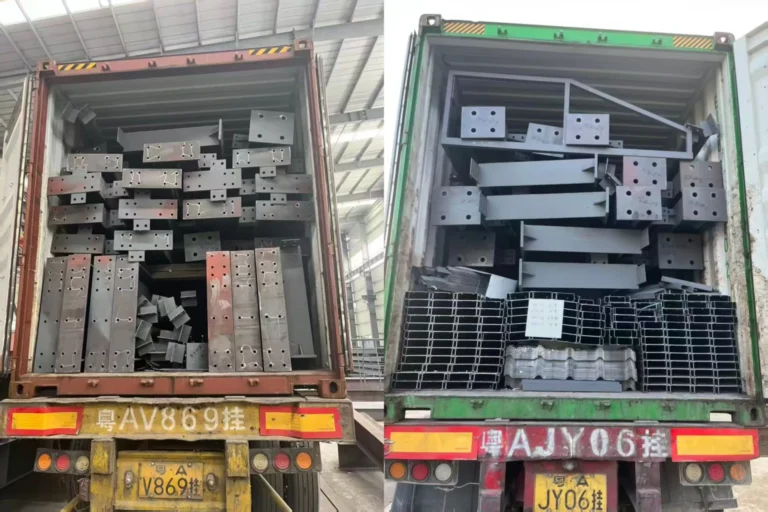
Planning context
Turn the project constraint into a reviewable input set.
Long members, secondary steel, plates, envelope components and accessories may need different packing, markings and handling. A method that works at the factory can fail at the destination if the container cannot enter the site, the equipment cannot reach the cargo or the assembly team cannot identify the required sequence.
- What is the destination port and final delivery route?
- Which components control the packing and container plan?
- What equipment and working area are available for unloading?
- Who owns storage, assembly, supervision and document handover?
Six inputs to prepare
Record confirmed values, sources and open questions separately.
- 01
Destination and route
Provide the destination port, final site, current forwarder information and known road, gate, turning or access restrictions.
- 02
Component list and geometry
Identify long primary members, secondary steel, plates, panels, doors, accessories and any item that controls handling or packing.
- 03
Packaging and loading preference
Record the preferred container method and protection needs, while keeping freight, availability and final suitability subject to the actual shipment.
- 04
Unloading equipment and working space
Confirm available cranes, forklifts or rack-handling equipment, together with safe container positioning and temporary storage areas.
- 05
Marking, documents and sequence
Coordinate packing lists, piece marks, drawings, handling notes and the relationship between unloading and assembly stages.
- 06
Responsibility and communication
Name the parties responsible for freight, customs, unloading, storage, assembly, supervision, inspection and resolving site questions.
Coordination workflow
Move from buyer need to a controlled technical brief.
- 01
Map the delivery chain
Follow the cargo from fabrication and packing through port, road, unloading, storage and assembly.
- 02
Select the method from real constraints
Compare cargo geometry, route conditions, container supply, equipment, labor and handling consequences together.
- 03
Prepare the handover package
Align markings, packing lists, drawings and responsibility records with the unloading and assembly sequence.
- 04
Confirm readiness before shipment
Check that the site can receive, unload, identify, store and assemble the supplied components.
Expected review output
Make the next engineering discussion more specific.
- A component and packing input register
- A route, access and unloading-equipment checklist
- A document and piece-mark handover list
- A supply, logistics and site responsibility matrix
Frequently asked questions
Keep each decision conditional and project-specific.
Should the loading method be chosen before the site equipment is known?+
No. Review the destination crane, forklift, access and working area with the cargo and route.
Is the lowest ocean freight always the lowest total cost?+
Not necessarily. Packing, equipment, labor, unloading time and handling consequences also affect the project.
What documents should follow the shipment?+
The exact package is project-specific, but piece identification, packing information, drawings and responsibility records should support unloading and assembly.
Can Ganyo assemble every exported building?+
Do not assume the site role. The contract and project responsibility matrix must state the supplied scope, local work and any supervision separately.
Prepare the project discussion
Share the destination plan before the shipment method is locked.
Include the route, component list, preferred method, site access, unloading equipment and responsibility split.